Conference Report on “Spaces of Peripheralization: Extractivism, Pollution and Environmental Future in Southeastern Europe”
Tagungsbericht zu “Spaces of Peripheralization: Extractivism, Pollution and Environmental Future in Southeastern Europe”
May 22, 2025, Giessen, Germany
“Is the future of the peripheralized energy-producing places like Pljevlja already predetermined, or is it open and continually being shaped? Who has the agency and power to shape that future – and in what ways, and towards what kind of future?”
Text detail from the photography exhibition “Extractivism, Pollution and the Future: Pljevlja in Photography,” Miloš Đurović
The relationship between environmental injustice, extractivism, and social marginalization has become a pressing concern in academic discourses, but has so far rarely been examined within the spatial context of Southeastern Europe. It is mostly the local scholars and activists who point to the region’s framing and understanding as Europe’s periphery (Igor Štiks, Ivan Đorđević, and Biljana Đorđević. 2024. “Why Together, Why Apart? An Epistolary Discussion about Yugoslavia and Its Remnants,” Canadian Slavonic Papers 66 (1–2): 66–81), shaped by the uneven legacies of post-socialist transformation and by the enduring impact of environmental degradation. Seeking to explore these intersections through an interdisciplinary lens, the International Graduate Centre for the Study of Culture (GCSC) at Justus Liebig University Giessen hosted the one-day conference “Spaces of Peripheralization: Extractivism, Pollution and Environmental Future in Southeastern Europe” on May 22, 2025. The event was initiated by the GCSC’s Research Area 7: Global Studies and Politics of Space and organized by IVANA DINIĆ, ZEKIYE GÜRÜN-ÜCEM, and ANNA IVANOVA, in cooperation with the Chair of Southeast European History at JLU. Bringing together scholars, artists, and practitioners, the conference created a space for reflecting on the ecological, political, and symbolic dimensions of peripheralization through a program that included a preparatory workshop, a keynote lecture, and a photography exhibition.
The event began with a workshop entitled “Visual Methods and Critical Sustainability Studies,” facilitated by MILOŠ DUROVIĆ, PhD candidate at the University of Regensburg. Designed primarily for doctoral researchers affiliated with the GCSC and Justus Liebig University Giessen, the session served not only as an introduction to visual methodologies but also as a space for critical reflection on the concept of sustainability itself. From the outset, Đurović encouraged participants to question the normative assumptions that often underpin sustainability discourse. Rather than treating sustainability as a neutral or universally desirable goal, the workshop encouraged participants to examine its historical trajectory, beginning with its early applications in agriculture and forestry and continuing into its current role within global development policy. Participants were also invited to reflect on how sustainability is frequently instrumentalized through greenwashing and technocratic narratives.
Through a series of slides and case examples, Đurović laid the groundwork for thinking with and through photography in the field of critical sustainability studies. He raised important questions about the power of images to document and disrupt, particularly in contexts of ecological injustice and spatial inequality. Drawing on examples of participatory visual practices, such as photovoice and art-based ethnography (including the cooperation with elementary school pupils), he emphasized the role of visual storytelling not merely as representation but as intervention, capable of reconfiguring the politics of knowledge production and challenging dominant frames.
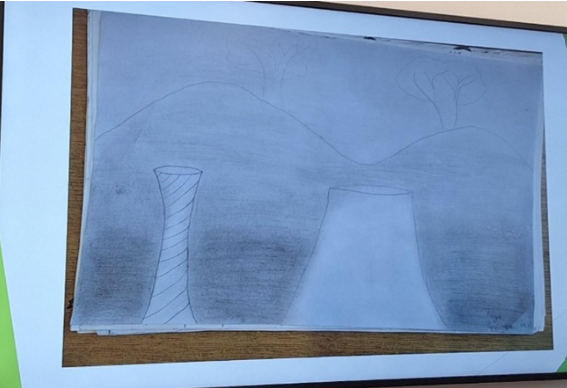
Fig. 1: Fieldwork photo: Drawing by an elementary school student at the fine arts class in Plejvlja, Montenegro, on the topic of what they disliked about their city, 2022
Photo credits: © Miloš Đurović
The discussion in this part of the workshop went beyond the practical advice on how to productively apply visual techniques and focused on theoretical tensions that underlie sustainability research. Key issues such as the contrast between sustainability and sustainable development, the limitations of ‘green growth’ paradigms, and the alternative imaginaries offered by degrowth movements were critically explored. Participants were encouraged to reflect on the politics of scale and voice: Who gets to define sustainability? Whose futures are being envisioned, and whose are foreclosed? What kinds of knowledge are rendered legitimate, and which are excluded in the process?
Throughout the workshop, Đurović wove together insights from political ecology, posthumanism, and environmental anthropology to problematize the extractivist logic often embedded in sustainability frameworks. At the same time, he pointed to the transformative possibilities of visual methods when grounded in ethical, participatory, and situated practices. The atmosphere of the session remained interactive, with participants engaging in open conversation, posing theoretical challenges, and connecting the presented material to their own research contexts. In doing so, the workshop laid a meaningful foundation for the keynote and exhibition that followed, both of which returned to the themes of peripheralization, environmental justice, and the role of critical methodologies in confronting complex ecological futures.
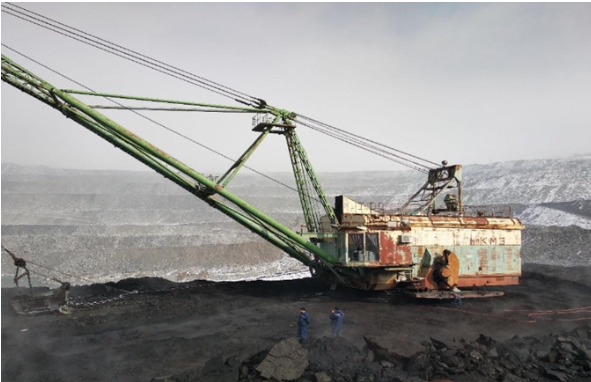
Fig. 2: Fieldwork Photo: Coal mine in Pljevlja, Montenegro, 2022
Photo credits: © Miloš Đurović
In the evening, GER DUIJZINGS (University of Regensburg) delivered a keynote lecture entitled “Spaces of Peripheralization: Extractivism, Pollution and Environmental Future in Southeastern Europe.” Drawing on his long-term ethnographic and comparative research across the Balkans, Duijzings offered a compelling analysis of environmental degradation and infrastructural neglect in Southeastern Europe. He situated the region within broader debates on ecological colonialism and uneven development within Europe itself. Rather than reproducing the familiar opposition between the Global North and South, he emphasized how certain regions within Europe have come to bear the disproportionate weight of environmental harm, infrastructural decay and social abandonment.
In his lecture, Duijzings reflected on the symbolic and material dimensions of the periphery, which often functions as a space of displacement and exclusion. He discussed how industrial and urban margins are repeatedly used for the disposal of waste, the concentration of pollution, and the relocation of vulnerable or marginalized populations, particularly focusing on the case of Bucharest’s urban fringe, Centura, where he pursued diligent fieldwork over multiple years. Through a close reading of peripheral zones shaped by historical transitions, from socialism to neoliberal capitalism, he highlighted the ways in which these spaces are continuously overwritten by new forms of power and investment, while their structural inequalities remain unaddressed.
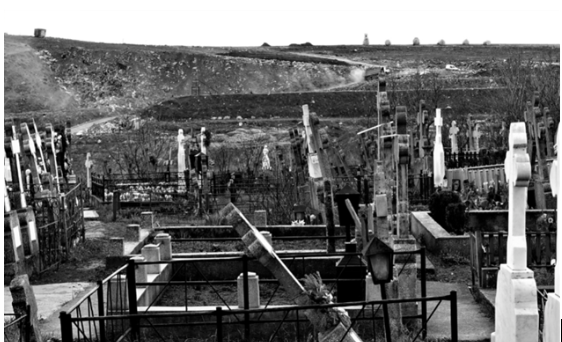
Fig. 3: Fieldwork Photo: Cementery in Leordeni with Glina landfill in the background, Bucharest, 2018
Photo credits: © Ger Duijzings
Central to his analysis was a call to examine the periphery not only as a geographical margin but also as a lens through which to understand Europe’s internal divisions and contradictions. By turning attention to places often excluded from dominant narratives, the lecture challenged participants to think critically about Europeanization and environmental policies. Duijzings concluded by encouraging researchers to engage more attentively with such spaces through long-term, situated and ethnographically grounded inquiry, including cooperation with (local) investigative journalists, artists and activists.
The keynote was followed by the opening of the photo exhibition “Extractivism, Pollution and the Environmental Future in Southeastern Europe: Pljevlja in Photography,” displaying Miloš Đurović’s work. The exhibition featured a series of photographs from the northern Montenegrin border town of Pljevlja, a place emblematic of the environmental consequences of extractive industries. Once a key industrial hub in socialist Yugoslavia, Pljevlja today faces persistent air pollution and ecological neglect. Đurović’s photographs vividly captured the visual contradictions of this town by placing its heavy industrial history and ongoing environmental damage alongside Montenegro’s symbolic status as the first ‘ecological state’ in Europe. This status stems from the fact that the country enshrined the epithet ‘ecological’ in the preamble of its 2007 constitution, declaratory and normatively committing to the policy of European green transition. The exhibition invites viewers to reflect on the dissonance between official environmental policies and the lived realities these policies claim to address.
Throughout the day, the conference created an interdisciplinary space that merged political ecology, decolonial theory, and visual practice. In doing so, the event has not only drawn attention to the environmental and social marginalization of Southeastern Europe but also emphasized the epistemic dimensions of peripheralization. By centring local communities and artistic interventions, the event contributed to a broader effort to decolonize knowledge production on Southeastern Europe and to explore environmental futures beyond extractivist frameworks.
Exhibition Insights: “Extractivism, Pollution and Environmental Future in Southeastern Europe: Pljevlja in Photography” by Miloš Đurović
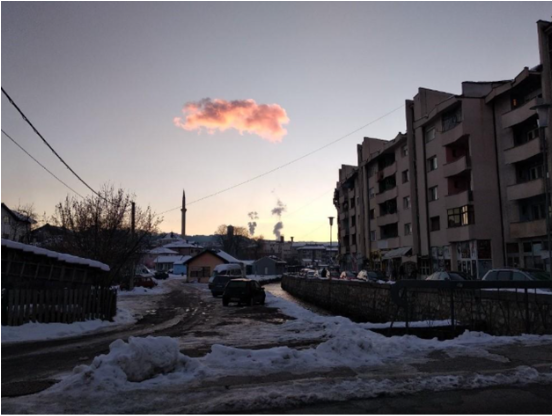
Fig. 4: © Miloš Đurović
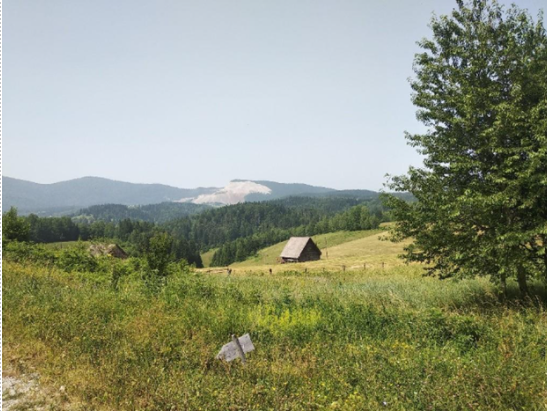
Fig. 5: © Miloš Đurović
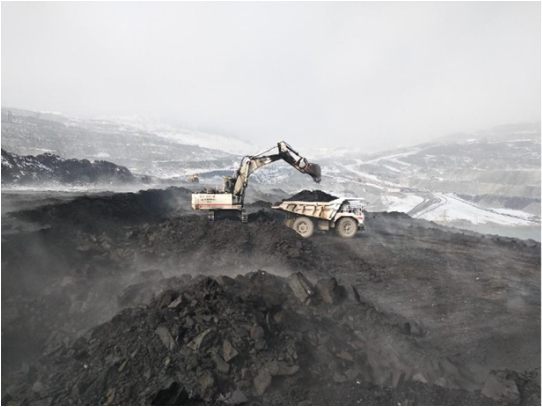
Fig. 6: © Miloš Đurović
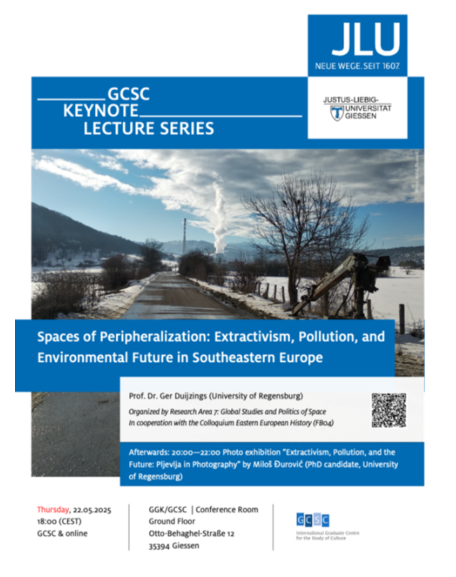
Programme
Thursday, May 22, 2025
Workshop
Miloš Đurović (University of Regensburg): “Visual Methods and Critical Sustainability Studies”
Keynote Lecture
Ger Duijzings (University of Regensburg): “Spaces of Peripheralization: Extractivism, Pollution and Environmental Future in Southeastern Europe”
Exhibition
Miloš Đurović (University of Regensburg): “Extractivism, Pollution and the Future: Pljevlja in Photography”
