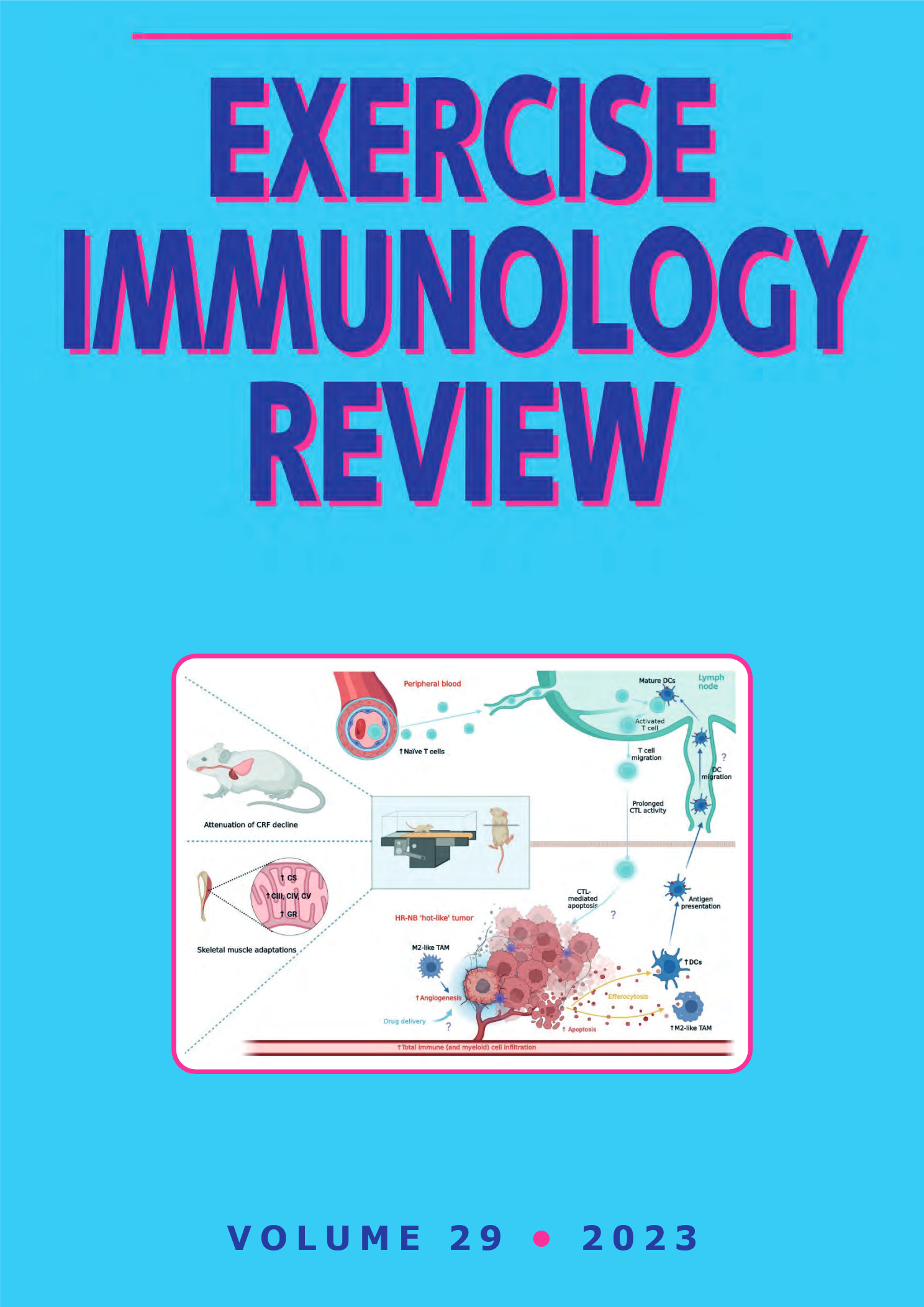
Combined exercise intervention in a mouse model of high-risk neuroblastoma: effects on physical, immune, tumor and clinical outcomes.
DOI:
https://doi.org/10.22029/eir.2023.1758Keywords:
CANCER-PATIENTS, CARDIORESPIRATORY FITNESS, CHILDHOOD-CANCER, T-CELL, BENEFITS, GROWTH, EXPRESSION, LANDSCAPE, SURVIVORS, MORTALITYAbstract
Background: Exercise might exert anti-tumoral effects in adult cancers but this question remains open in pediatric tumors, which frequently show a different biology compared to adult malignancies. We studied the effects of an exercise intervention on physical function, immune variables and tumoral response in a preclinical model of a highly aggressive pediatric cancer, high-risk neuroblastoma (HR-NB).
Methods: 6-8-week-old male mice with orthotopically-induced HR-NB were assigned to a control (N=13) or exercise (5-week combined [aerobic+resistance]) group (N=17). Outcomes included physical function (cardiorespiratory fitness [CRF] and muscle strength), as well as related muscle molecular indicators, blood and tumor immune cell and molecular variables, tumor progression, clinical severity, and survival.
Results: Exercise attenuated CRF decline (p=0.029 for the group-by-time interaction effect), which was accompanied by higher muscle levels of oxidative capacity (citrate synthase and respiratory chain complexes III, IV and V) and an indicator of antioxidant defense (glutathione reductase) in the intervention arm (all p <= 0.001), as well as by higher levels of apoptosis (caspase-3, p=0.029) and angiogenesis (vascular endothelial growth factor receptor-2, p=0.012). The proportion of 'hot-like' (i.e., with viable immune infiltrates in flow cytometry analyses) tumors tended to be higher (p=0.0789) in the exercise group (76.9%, vs. 33.3% in control mice). Exercise also promoted greater total immune (p=0.045) and myeloid cell (p=0.049) infiltration within the 'hot' tumors, with a higher proportion of two myeloid cell subsets (CD11C+ [dendritic] cells [p=0.049] and M2-like tumor-associated macrophages [p=0.028]), yet with no significant changes in lymphoid infiltrates or in circulating immune cells or chemokines/cytokines. No training effect was found either for muscle strength or anabolic status, cancer progression (tumor weight and metastasis, tumor microenvironment), clinical severity, or survival.
Conclusions: Combined exercise appears as an effective strategy for attenuating physical function decline in a mouse model of HR-NB, also exerting some potential immune benefits within the tumor, which seem overall different from those previously reported in adult cancers.
References