
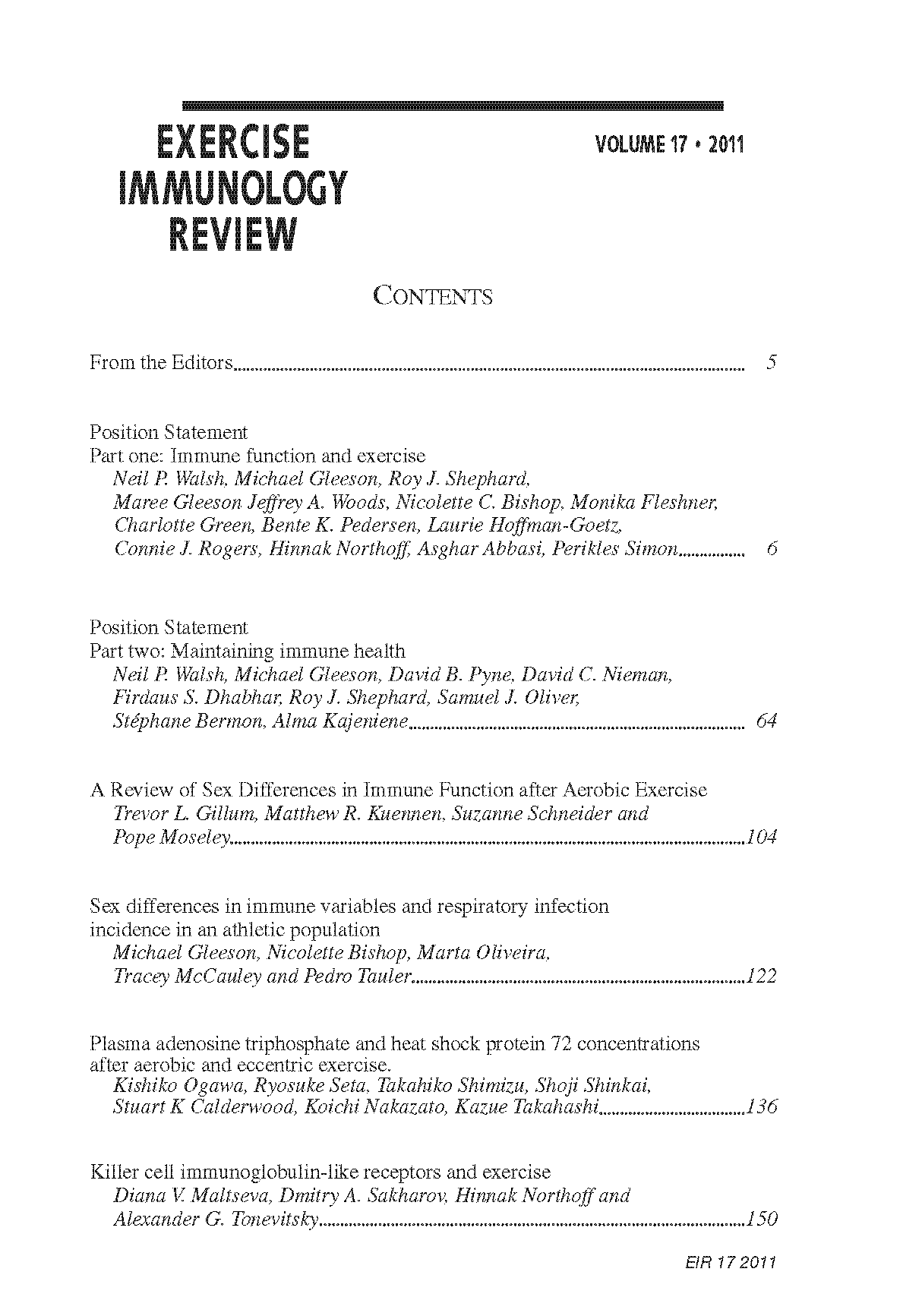
Killer cell immunoglobulin-like receptors in exercise
DOI:
https://doi.org/10.22029/eir.2011.1666Keywords:
IG-LIKE RECEPTOR, BLOOD MONONUCLEAR-CELLS, GENE-EXPRESSION, NK CELLS, T-CELLS, PERIPHERAL-BLOOD, CUTTING EDGE, HLA-B, PSORIATIC-ARTHRITIS, DNA METHYLATIONAbstract
Exercise can alter human health in both beneficial (e. g. reduced risk of infection and of atherosclerosis) and adverse (e. g. anaphylaxis, exercise-induced asthma, and exacerbation of chronic illness) ways. Hitherto, the mechanisms linking exercise and health are not fully understood, but may rest on the capability of exercise to both increase circulating immune cells and modulate their activity. Natural killer (NK) cells, a major component of innate immunity, are one of the most sensitive populations of immune cells to exercise stress. NK cells play an important role in the detection and elimination of tumours and virus-infected cells. To mediate NK cell functions, there is an array of activating and inhibitory receptors with distinct specificities on their surface. Killer-cell immunoglobulin-like receptors (KIRs) which bind to MHC class fare a key example of receptors expressed by NK cells. The combination of MHC class I and KIR variants influences resistance to infections, susceptibility to autoimmune diseases, as well as complications of pregnancy. It is suggested that KIRs may also determine a considerable part of the effects of physical activity on human health. In this review we discuss KIRs in more detail, their role in the onset of human diseases, and the influence of acute exercise on KIR gene expression.References
Downloads
Published
2011-12-31
Issue
Section
Articles