
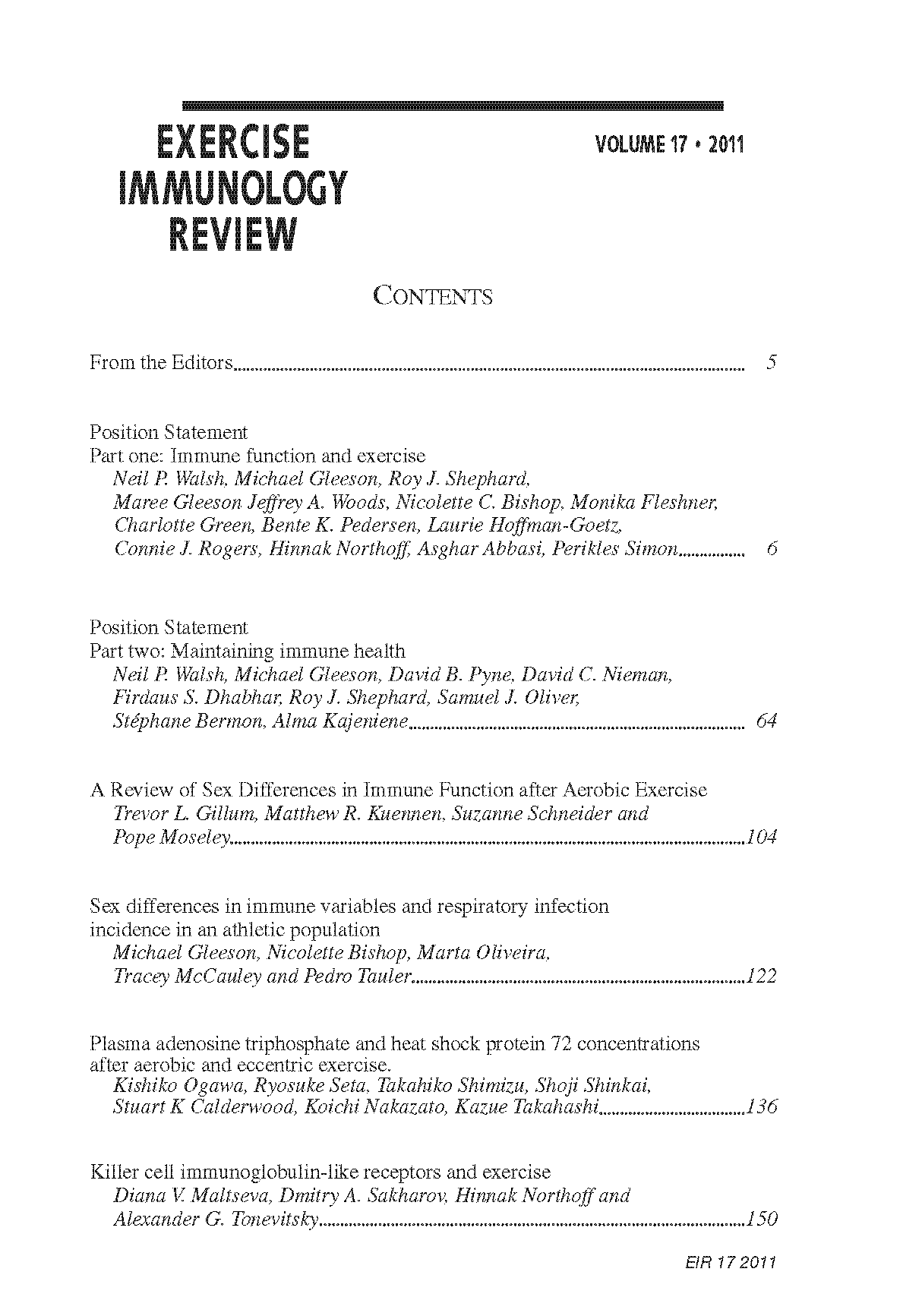
Sex differences in immune variables and respiratory infection incidence in an athletic population
DOI:
https://doi.org/10.22029/eir.2011.1664Keywords:
KILLER-CELL ACTIVITY, SALIVARY IGA, IMMUNOGLOBULIN-A, MENSTRUAL-CYCLE, EXERCISE, GENDER, AGE, EXPRESSION, SECRETION, STRESSAbstract
The purpose of this study was to examine sex differences in immune variables and upper respiratory tract infection (URTI) incidence in 18-35 year-old athletes engaged in endurance-based physical activity during the winter months. Eighty physically active individuals (46 males, 34 females) provided resting venous blood samples for determination of differential leukocyte counts, lymphocyte subsets and whole blood culture multi-antigen stimulated cytokine production. Timed collections of unstimulated saliva were also made for determination of saliva flow rate, immunoglobulin A (IgA) concentration and IgA secretion rate. Weekly training and illness logs were kept for the following 4 months. Training loads averaged 10 h/week of moderate-vigorous physical activity and were not different for males and females. Saliva flow rates, IgA concentration and IgA secretion rates were significantly higher in males than females (all P < 0.01). Plasma IgA, IgG and IgM concentrations and total blood leukocyte, neutrophil, monocyte and lymphocyte counts were not different between the sexes but males had higher numbers of B cells (P < 0.05) and NK cells (P < 0.001). The production of interleukins 13, 2, 4, 6, 8 and 10, intetferon-gamma and tumour necrosis factor-a in response to multi-antigen challenge were not significantly different in males and females (all P > 0.05). The average number of weeks with URTI symptoms was 1.7 +/- 2.1 (mean +/- SD) in males and 2.3 +/- 2.5 in females (P = 0.311). It is concluded that most aspects of immunity are similar in men and women in an athletic population and that the observed differences in a few immune variables are not sufficient to substantially affect URTI incidence. Sex differences in immune function among athletes probably do not need to be considered in future mixed gender studies on exercise, infection and immune function unless the focus is on mucosal immunity or NK cells.References
Downloads
Published
2011-12-31
Issue
Section
Articles